
You picked a course, but you are not sure what it really means or where it leads. That uncertainty is common, and it can cost you time, money, and direction if you move forward without clarity.
What is science laboratory technology, and is it the right path for you? This article gives you clear, honest answers so you can decide with confidence.
Many students choose courses based on what sounds good or what a friend suggested. Without a real understanding of the course, they graduate confused about their career options and struggle to find jobs in the right field.
Behind every scientific breakthrough, whether in medicine, agriculture, or environmental protection, there is a laboratory and skilled professionals working behind the scenes. Without those people, none of that research would have happened.
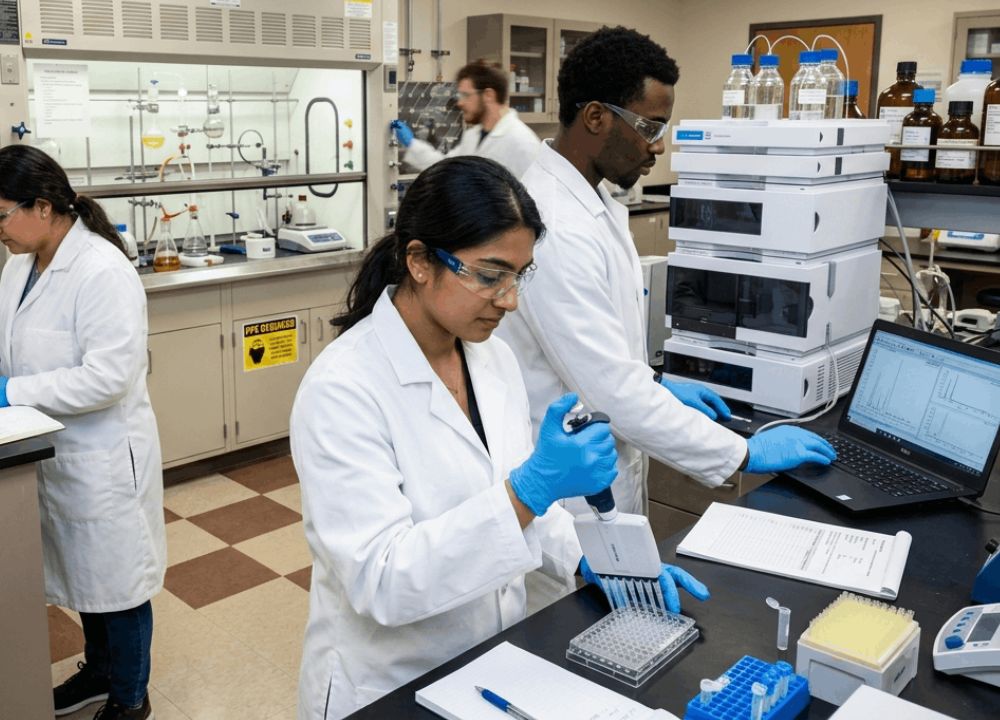
Science Laboratory Technology trains you to be one of those people. You learn to handle equipment, run tests, analyze results, and keep labs running safely and accurately. It is a hands-on, skills-based field that connects science to real-world results.
What Is the Meaning of Science Laboratory Technology?
Science Laboratory Technology, often called SLT, is a branch of applied science. It focuses on the technical and practical side of laboratory work across biology, chemistry, and physics.
It is not just about mixing chemicals in a room. It covers how to operate scientific instruments, follow testing procedures, record results properly, and ensure that everything in a lab meets safety standards. The field sits at the heart of research, healthcare, and industry.
What Is Science Laboratory Technology All About?
SLT is about developing the skills to work inside a laboratory, not just studying it from a textbook. Students learn how labs function, how tests are conducted, and how results are interpreted and reported.
The field covers a wide range, from clinical testing in hospitals to quality control in factories and environmental testing in research centers. It is both technical and practical, meaning you spend a lot of time actually doing things, not just reading about them.
What Is Science Laboratory Technology Course All About?
The course blends classroom theory with regular hands-on lab sessions. You study scientific principles and then apply them directly using real equipment in controlled settings.
Students use state-of-the-art analytical instruments equivalent to those used by working scientists. That practical exposure is what makes SLT graduates ready for the job market right after graduation.
What Is Involved in Science Laboratory Technology
The course covers subjects such as biochemistry, microbiology, chemistry, physics, and instrumentation. Each subject builds on the last, giving you a layered understanding of lab work.
Beyond the science, you also learn lab safety rules, how to document results, how to handle hazardous materials, and how to maintain lab equipment. These are the everyday skills that employers in this field actually hire for.
What Does Science Laboratory Technology Deal With
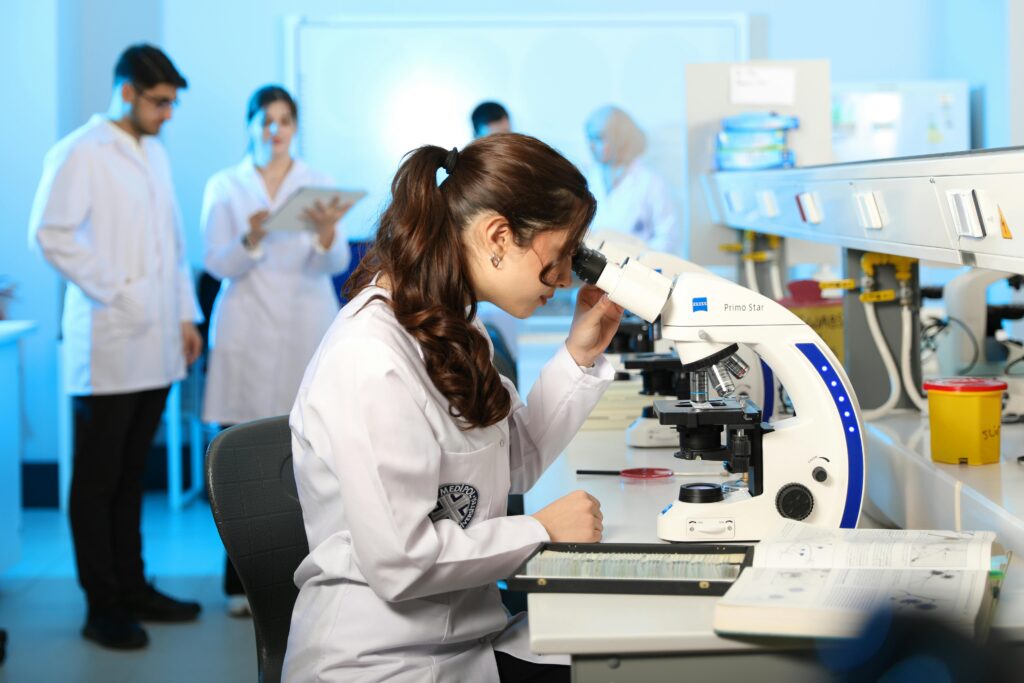
SLT deals with the analysis and investigation of samples and substances across scientific disciplines. Whether it is testing blood in a hospital, analyzing water quality, or checking the purity of a food product, SLT professionals are behind the results.
The field touches agriculture, pharmaceuticals, environmental science, petrochemicals, and healthcare. It is not limited to one sector, which is one reason the course is considered so versatile.
What Is the Work of Science Laboratory Technology
The daily work involves preparing samples, operating instruments, recording data, and writing accurate reports. A lab technologist is often the person who produces the numbers that a doctor, researcher, or engineer uses to make decisions.
According to Mayo Clinic College of Medicine, it is estimated that 60 to 70 percent of all decisions regarding a patient’s diagnosis, treatment, hospital admission, and discharge are based on laboratory test results. That is how central this work is to real outcomes.
How Does a Computer Relate to Science Laboratory Technology
Computers are now a core part of laboratory work, not an optional extra. Lab information systems, digital data recording, and automated equipment all require technologists to be comfortable with technology.
Students in SLT learn to use software for data analysis, result management, and equipment control. As labs become more automated, the ability to work with computers and digital tools is just as important as physical lab skills.
What Are the Branches of Science Laboratory Technology
SLT has several option areas, allowing students to specialize. The main branches include biochemistry, microbiology, chemistry, physics, geology, and environmental science.
Each branch focuses on a specific area of laboratory practice. A student in the microbiology option, for example, works heavily with bacteria, viruses, and culture techniques, while someone in the chemistry option focuses on chemical analysis and instrumentation.
What Are the Courses Under Science Laboratory Technology
Core courses in SLT typically include general chemistry, biology, physics, biochemistry, microbiology, instrumentation, and safety management. These run across all years and form the academic backbone of the program.
Later in the course, students take specialized classes based on their chosen option. Practical sessions, industrial training, and seminars are also part of the program, giving students both knowledge and real experience.
Is Science Laboratory Technology a Medical Course
SLT is not purely a medical course, but it has a strong connection to the healthcare sector. Many SLT graduates work in hospitals and diagnostic labs, running tests that help doctors treat patients.
The course itself falls under applied sciences, not medicine. However, if your goal is to work in a medical setting, the SLT course gives you a clear and legitimate route into that environment without studying full medicine.
What Is the Importance of Science Laboratory Technology
SLT plays a critical role in science, healthcare, and industry. Without trained lab technologists, hospitals cannot process tests, researchers cannot validate findings, and industries cannot maintain product quality.
The field supports progress in almost every sector. From detecting diseases early to ensuring that food products are safe to eat, SLT professionals contribute to outcomes that affect everyday life in very real ways.
Why Do We Study Science Laboratory Technology
We study SLT because the demand for skilled lab professionals continues to grow. According to Bureau of Labor Statistics data cited by Apollo University, around 22,600 positions for clinical laboratory technologists and technicians are expected to open each year, on average, over the next decade.
Beyond employment, the course builds a mindset for precision, accuracy, and problem-solving. These skills carry value in any environment, not just inside a lab.
Is Science Laboratory Technology a Good Course
Yes, SLT is a genuinely good course for the right person. If you enjoy science, prefer practical work over purely theoretical study, and want a career with real employment demand, it is a strong choice.
The course opens doors in healthcare, research, industry, and government. Graduates are not limited to one type of job, which means the course offers both flexibility and job security.
Is Science Laboratory Technology a Professional Course
SLT is recognized as a professional course. In Nigeria, for example, graduates are certified through the Nigerian Institute of Science Laboratory Technology (NISLT), which regulates the profession and sets standards.
This professional status means SLT is not just an academic qualification. It is a certification that carries weight with employers and gives graduates a recognized professional identity.
Is Science Laboratory Technology Marketable
SLT is highly marketable because the skills it teaches are in demand across multiple industries. Hospitals, pharmaceutical companies, food manufacturers, environmental agencies, and research institutes all need trained lab technologists.
The field is also growing. As healthcare expands and research becomes more technology-driven, the need for people who can manage labs and produce accurate results only increases. Graduates with practical skills and the right specialization have strong earning and career potential.
Where Can Science Laboratory Technology Work
SLT graduates can work in hospitals, research institutes, pharmaceutical companies, food and beverage industries, petrochemical companies, environmental agencies, and educational institutions. The range of sectors is wide.
Some graduates also go on to quality control roles in manufacturing or move into management after gaining experience. The course does not lock you into one career path.
Can Science Laboratory Technology Work in a Hospital
Yes, SLT graduates can and do work in hospitals. They work in diagnostic labs, blood banks, microbiology units, and chemical pathology departments, running the tests that doctors rely on daily.
Hospitals are actually one of the most common employers for SLT graduates. If your goal is to work in a clinical setting, the course gives you a direct and practical route to that environment.
How Many Years Is Science Laboratory Technology
The duration of SLT depends on the level of study and the country. A diploma program typically takes two to two and a half years, while a bachelor’s degree program usually takes three to five years.
In Nigerian universities, for example, the Federal University of Technology, Owerri offers a five-year B.Tech program in Science Laboratory Technology, which includes one year of industrial training. Different institutions have different structures, so it is worth checking the specific program before applying.
How to Fill the SIWES Log Book for Science Laboratory Technology
The SIWES logbook is your official record of daily activities during industrial training. It is a graded document, and a poorly filled logbook can hurt your final result.
The key is to write what you actually did each day, in clear and specific sentences. Your logbook should include what you observed, learned, and practiced during your industrial training, covering the tests you ran, the equipment you used, and the procedures you followed.
Do not wait until the end of your training to start filling it. Write each week as you go, record your supervisor’s signature at the end of each week, and keep your entries specific rather than general. Instead of writing “worked in the lab,” write something like “assisted in urinalysis using dipsticks, recorded results, and helped maintain sample records.” That level of detail is what earns you marks.
FAQs
What is the difference between science laboratory technology and medical laboratory science?
SLT is a broader field that covers multiple science areas including chemistry, microbiology, and physics. Medical Laboratory Science focuses specifically on clinical testing for patient diagnosis. SLT graduates can work in many sectors, while MLS graduates are more focused on healthcare settings.
Can SLT graduates further their education after the course?
Yes, SLT graduates can go on to do postgraduate studies in related fields. Some go into a master’s degree in their specialization, while others pursue professional certifications to deepen their expertise and increase earning potential.
Is science laboratory technology a hard course?
It has both theory and practical demands, so it requires attention to detail and genuine interest in science. If you enjoy hands-on learning and working with equipment, most students find it manageable and even interesting.
What is the salary range for science laboratory technology graduates?
Salaries vary by country, employer, and level of experience. In the US, laboratory technologists typically earn between $40,000 and $98,000 annually, depending on specialization and seniority.
Do SLT students undergo industrial training?
Yes, SIWES (Student Industrial Work Experience Scheme) is a compulsory part of the SLT program in Nigerian universities. Students are attached to labs, hospitals, or research centers for hands-on training and must keep a logbook of their daily activities.